An Overview ofAsset Reconstruction Company (ARC)
In a fast-growing economy like India, where credit and finance are the lifelines of businesses
and industries, the issue of non-performing assets (NPAs) has long been a challenge. Banks and
financial institutions, despite their rigorous lending frameworks, often face situations where
borrowers fail to repay loans on time. Over time, this leads to mounting NPAs, which weaken the
financial system, reduce lending capacity, and slow down economic progress.
To address this critical concern, the Government of India introduced a specialized mechanism under
the Securitisation and Reconstruction of Financial Assets and Enforcement of Security Interest
(SARFAESI) Act, 2002. This is where Asset Reconstruction Companies (ARCs) come into play.
An ARC is a specialized financial institution that acquires NPAs and distressed assets from banks
and financial institutions. Instead of leaving banks burdened with bad loans, ARCs purchase them
at a discounted value and then focus on recovering, restructuring, or reconstructing these loans.
In doing so, ARCs not only help lenders clean their balance sheets but also bring defaulting assets
back into productive use, creating a healthier credit environment.
Understanding the Role of ARCs
An Asset Reconstruction Company (ARC) acts as a bridge between banks and defaulting borrowers.
On one hand, banks get relief by selling their bad assets and freeing up capital for fresh lending.
On the other hand, borrowers get a structured opportunity to resolve their debts through
restructured repayment terms, settlements, or asset sales.
This creates a win-win situation for all stakeholders:
- Banks and financial institutions regain liquidity and strengthen their balance sheets.
- Borrowers are given a second chance to regularize their accounts and avoid legal complications.
- The economy benefits through renewed capital flow into productive sectors.
Thus, ARCs are not merely recovery agencies; they are system stabilizers and growth
facilitators within the financial ecosystem.
Key Features of an ARC
1. Regulatory Oversight
- ARCs must obtain a license from the Reserve Bank of India (RBI).
- They are bound by RBI’s strict compliance guidelines, ensuring transparency and accountability in their operations.
2. Acquisition of Stressed Assets
- ARCs acquire Non-Performing Assets (NPAs) from banks and financial institutions.
- This enables banks to clean up their balance sheets and focus on fresh lending.
3. Asset Reconstruction and Management
- ARCs may restructure loans by extending repayment schedules, reducing interest rates, or converting debt into equity.
- If restructuring is not feasible, ARCs may sell secured assets to recover outstanding dues.
4.Security Enforcement Powers
- Under the SARFAESI Act, ARCs can enforce security interests without court intervention.
- They can take possession of assets, manage them, or auction them to recover debts.
5. Trust Mechanism
- Acquired assets are often managed through trusts established by the ARC.
- This ensures systematic distribution of recoveries among investors.
6. Capital Requirement
- The Reserve Bank of India mandates a minimum Net Owned Fund (NOF) for ARCs.
- This ensures that only financially strong and credible entities operate in the sector.
Benefits of Establishing an ARC
Resolution of NPAs
- ARCs play a direct role in reducing bad loans in the banking sector.
- This helps banks clean up balance sheets and meet regulatory capital requirements.
Financial Stability for Banks
- By unlocking capital stuck in NPAs, ARCs help banks resume fresh lending activities.
- This strengthens financial institutions and boosts the overall credit cycle.
Professional Management of Distressed Assets
- ARCs bring specialized skills, strategies, and dedicated teams for recovery and asset management.
- This ensures more efficient and result-oriented recovery compared to traditional bank recovery methods.
Investor Confidence
- Transparent processes instill confidence among institutional investors and global stakeholders.
- They demonstrate that India’s financial system has mechanisms to deal with defaults effectively.
Contribution to Economic Growth
- Freed-up banking capital is redirected towards new businesses, industries, and infrastructure projects.
- This stimulates economic revival and employment generation.
Compliance Advantage
- ARCs operate under the robust framework of the RBI and the SARFAESI Act.
- This ensures full legal recognition and credibility.
Thus, ARCs are not merely recovery agencies; they act as financial stabilizers that help strengthen
the banking sector and promote sustainable economic growth.
Our Services in ARC Incorporation
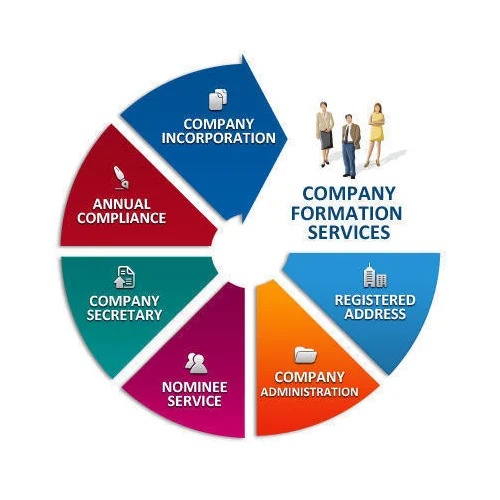
Establishing an Asset Reconstruction Company involves multiple legal, financial, and regulatory steps.6
At [Your Company Name] , we offer comprehensive services to ensure a smooth and compliant incorporation process.
1. End-to-End Assistance in ARC Registration with RBI
- We guide you through the entire process of securing an ARC license.
- From initial application to final approval while ensuring full compliance with RBI norms.
2. Business Plan Preparation
- Asset acquisition models.
- Recovery mechanisms.
- Capital structure planning.
- Projected financial planning and financial forecasts.
3. Documentation & Compliance Reports
- Memorandum & Articles of Association (MoA & AoA).
- Capital adequacy statements.
- Net Owned Fund compliance reports.
- Trust creation documents.
4. Capital Structuring & Funding Guidance
- Advisory on minimum capital requirements.
- Equity infusion strategies.
- Long-term funding and regulatory compliance planning.
5. SARFAESI Application Support
- Drafting and filing applications under the SARFAESI Act.
- Liaising with RBI authorities throughout the approval process.
6. Trust Creation & Management Models
- Setting up trust structures for asset management.
- Ensuring proper distribution of recoveries to investors and stakeholders.
7. Ongoing Compliance & Governance Support
- Periodic RBI reporting.
- Compliance with prudential norms.
- Governance frameworks and internal audits.
Why Choose Us for ARC Incorporation
-
Expertise with RBI Regulations – Years of experience in financial regulatory compliance and ARC licensing requirements.
-
Comprehensive Solutions – From documentation and application filing to post-incorporation support,
we cover every stage of ARC setup.
-
Tailored Advisory – Customized strategies designed around your financial goals,
capital structure, and target markets.
-
Long-Term Partnership – We don’t just assist with registration;
we support your ARC’s sustainable growth and operational stability.
-
Ethical Standards – Transparent and professional services ensuring trust, integrity, and full regulatory compliance.
Requirements for RERA Registration
- Project size exceeds 500 sq. meters or 8 units
- Real estate agents marketing RERA-registered projects
- Proper documentation and title ownership proofs
- Separate bank account for each project
Fee Structure:
- Promoters: Fee depends on project size and state rules
- Agents: Fixed registration fee (varies by state)
ARC as a Pillar of India’s Financial Ecosystem
In conclusion, Asset Reconstruction Companies (ARCs) are much more than recovery agents.
They act as guardians of the financial system, ensuring that bad loans do not hinder
economic growth. By acquiring, restructuring, and resolving Non-Performing Assets (NPAs),
ARCs help banks refocus on fresh lending, stabilize investor confidence, and inject
renewed vitality into the economy.
With the right guidance, expertise, and compliance support, establishing an ARC can
become not only a profitable venture but also a meaningful contribution to India’s
financial stability and long-term economic development.
At [Your Company Name], we are committed to being your trusted partner
throughout this journey—simplifying the complexities of ARC incorporation and helping
you build a strong institution that contributes to financial recovery and sustainable growth.
.png)