Cost Management: Introduction
In today’s competitive and fast-changing global economy, business success is no longer measured solely by how much revenue an organization generates. Increasingly, it is defined by how effectively that revenue is managed. Many companies enjoy strong sales yet struggle to remain profitable due to weak cost control.
Rising input prices, inefficient operations, and unplanned expenditures can silently erode margins and strain cash flow. This reality has made cost management one of the most critical pillars of modern business. It is not about aggressive cost cutting, but about understanding where money is spent and how decisions can be optimized to create long-term value.
Understanding Strategic Cost Management
Cost management refers to the systematic process of planning, estimating, controlling, monitoring, and optimizing costs to ensure that a business operates within its financial capacity. Unlike traditional accounting, which primarily records historical transactions, cost management looks forward.
Every major strategic move—launching a new product, expanding into a new market, acquiring another company, or investing in technology—has financial implications. Without a structured financial strategy, even good business ideas can fail. It involves:
- Budget preparation and real-time monitoring.
- Identifying key cost drivers and operational inefficiencies.
- Analyzing cost vs. benefit of all business activities.
- Evaluating financial risks and eliminating wasteful spending.
Why Cost Management Is Crucial
Profitability Maximization: Controlling costs directly increases profit margins without necessarily increasing sales—crucial in competitive markets.
Strategic Planning: Accurate cost forecasts allow leadership to evaluate opportunities, assess risks, and plan growth initiatives with greater confidence.
Competitive Advantage: Businesses that manage costs effectively can offer competitive pricing without sacrificing profitability, building trust with investors and stakeholders.
Core Components & Techniques
Cost management is a continuous cycle consisting of several interconnected stages:
- Cost Planning: Creating budgets and allocating funds across departments.
- Cost Estimation: Using historical data and predictive models to determine expected expenses.
- Cost Control: Monitoring ongoing expenses and taking corrective measures when they exceed projections.
- Cost Allocation: Assigning costs to specific projects or products for accurate performance evaluation.
- Cost Optimization: Streamlining operations and renegotiating vendor contracts to reduce costs without compromising quality.
Proven Techniques:
- Activity-Based Costing (ABC): Allocating overhead based on actual activities.
- Target Costing: Working backward from a competitive market price.
- Standard & Marginal Costing: Evaluating performance against benchmarks and focusing on variable costs.
- Life-Cycle Costing: Evaluating costs from development to disposal.
The Cost Management Process
We combine financial expertise with advanced technology to ensure sustainable growth.
1. Planning & Forecasting:
- Define business goals and financial objectives.
- Use predictive models to identify potential cost overruns.
2. Monitoring & Control:
- Track actual expenses against budgets regularly.
- Implement real-time dashboards for management insights.
3. Optimization:
- Eliminate wasteful spending and streamline processes.
- Leverage technology (AI, ERP, Cloud) to reduce administrative overhead.
Why Choose Us?
We don't just manage numbers; we guide financial strategy. Our strength lies in deep industry experience across Manufacturing, IT, Retail, EPC, and Healthcare.
- Customized Solutions: Strategies tailored to your unique business model, not one-size-fits-all.
- Technology Integration: Leveraging AI, ERP, and automation for smarter cost control.
- End-to-End Support: From planning to reporting, we manage the entire cost management cycle.
Overcoming Challenges:
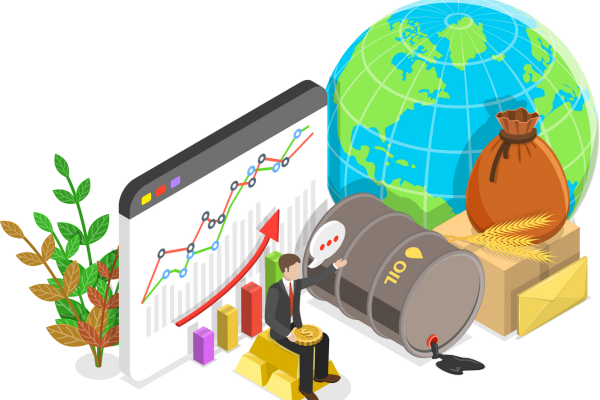
We help you navigate market volatility, rising raw material costs, and complex global operations through expert strategic planning.
Frequently Asked Questions
The primary goal is to ensure the business operates within its financial capacity while maximizing profitability and value creation.
No. It is about managing resources wisely, improving efficiency, and aligning spending with strategy without compromising quality.
Technology like AI and ERP provides real-time tracking, accurate forecasting, and automation to reduce errors and administrative costs.
.png)